Click to enlarge.
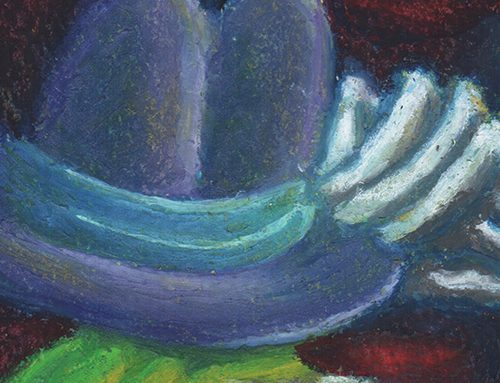
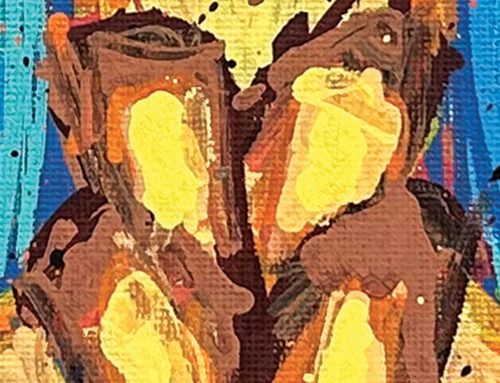
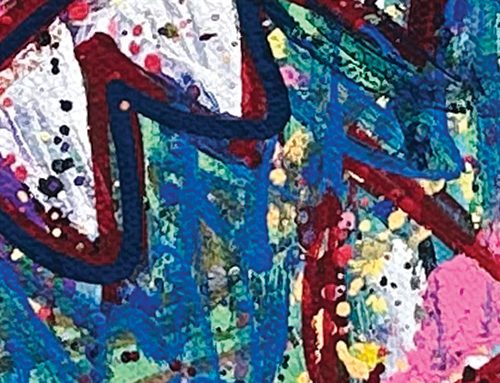
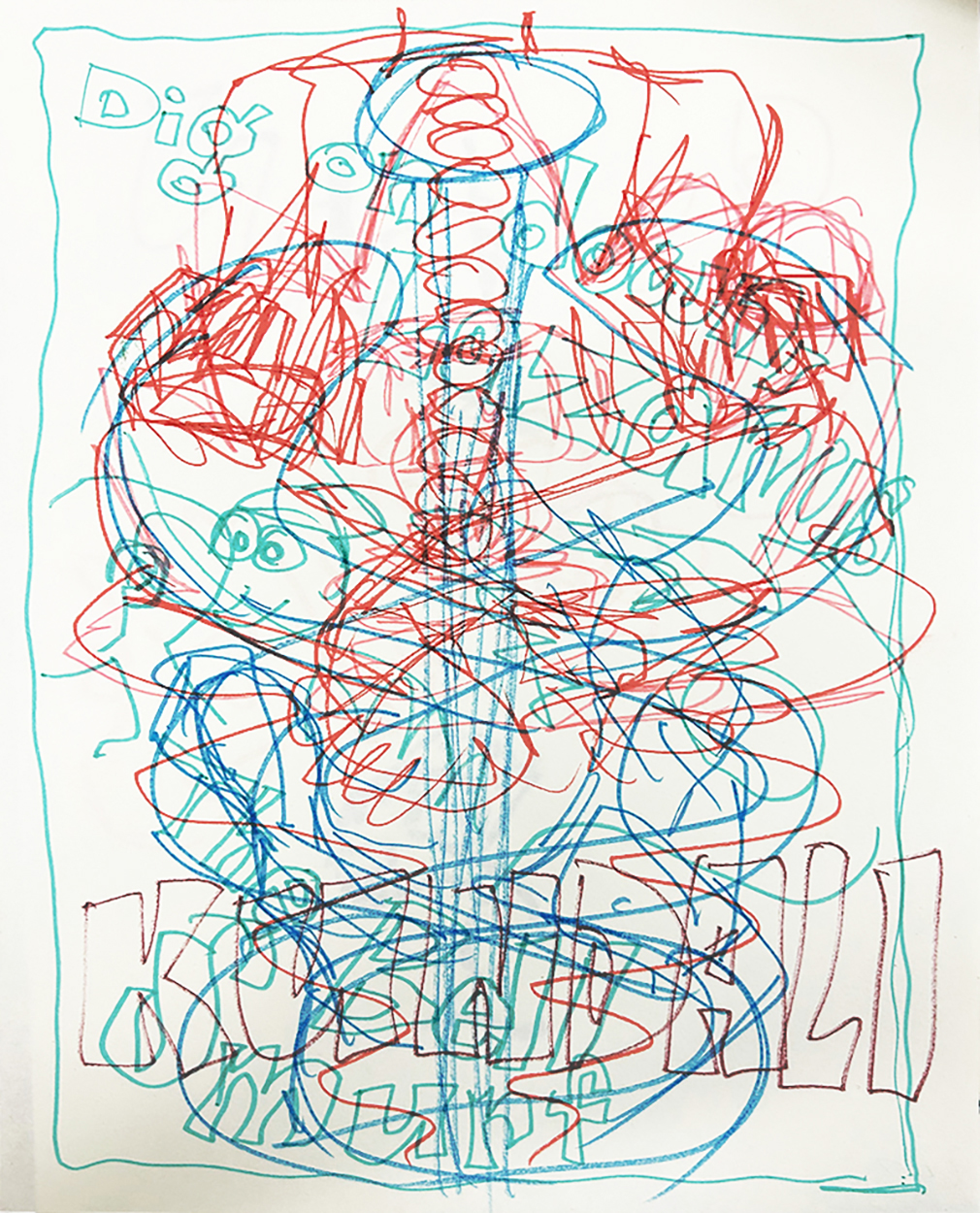
Here’s the conclusion to my trio of serpent-themed drawings: “Rise” (see part one here and part two here). Although I started this one as I always do, it ended up being the least “automatic” of the bunch. My process is to begin with doodling or writing whatever comes to mind, which you can see in this photo of the drawing in its early stages:
Click to enlarge.
I drew a Smurf-like character, so I wrote “Smurf.” I either thought of or was listening to the song “DIG!” by Big Special, so I wrote the lyrics, “Dig on down.” That made me think of “Dig, Lazarus, Dig” by Nick Cave and the Bad Seeds, so I added a comma to the end of “Dig on down” and wrote “Lazarus” underneath. I was trying not to draw any snakes or serpents, so I used a red marker to draw a figure seated in the quarter-lotus position in the top-center of the page. I don’t know why I doodle people meditating but I’ve been doing it for a long time and doing it this time reminded me that there might be a serpent chakra. I looked it up and was excited to see that I was right: the kundalini or “coiled snake” is found at the base of the spine and is associated with the feminine divine. When awakened, it rises toward enlightenment.
This was the perfect theme for my third drawing; at the bottom of the page I excitedly misspelled “kundalini” as “kundali.” I find it hard not to sympathize with the serpent from the Garden of Eden or serpents who are stepped on more generally, especially those drawn as sad cartoon characters. So I was excited to remember that not all cultures view serpents as evil the way Christians do. Even Christians, as shown with the Gadsden Flag, don’t always view serpents this way. The put-upon snakes of my first two drawings could be redeemed in this final drawing. The only problem was that I had two snakes to redeem, whereas there is only one kundalini. That’s when I thought of the caduceus, the winged staff of Hermes entwined by two rising serpents. I drew the staff of the caduceus atop the spine of my meditating figure, then added the two snakes. With the concept and layout in place, all that remained were the details.
If you read the explanations for my serpent trilogy, thanks for following along! For some reason I always felt that my work had to speak for itself, even if people would have to be mindreaders to understand it. I figured that was because my art wasn’t good enough, but on a recent trip to the Crocker I was reminded that a lot of works of art have placards accompanying them that help put them in context or explain the artist’s thinking. I thought I would give that a try 🙂